Dr. Julianne R. Biroschak, MD
Updated: Jan 29, 2022
Specialty: Board Certified in Obstetrics and Gynecology
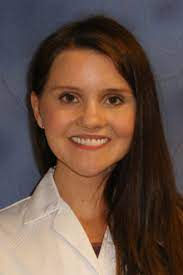
Background
Dr. Julianne Biroschack earned her bachelor of arts degree from Northwestern University. She subsequently earned her medical degree from Jefferson Medical College. While attending medical school, Dr. Biroschak was also elected to the Alpha Omega Alpha Honor Society. While completing her residency at the George Washington University Medical Center in Washington, D.C., she received an Award for Excellence in Female Pelvic Reconstructive Surgery and was also elected to the Gold Humanism Honor Society. After completing her residency, Dr. Biroschak became board certified in obstetrics and gynecology by the American Board of Obstetrics and Gynecology, and then became a fellow of the American College of Obstetrics and Gynecology.
Later on in her career in the medical field, she was also an assistant professor in the Obstetrics and Gynecology Dept. at Mount Sinai Medical Center. Dr. Biroschak's hospital affiliations include WestMed Medical Group and Greenwich Hospital.
Dr. Biroschak's areas of clinical focus include preventative women's healthcare, normal and high risk pregnancies, as well as minimally invasive gynecological surgery.
More about Obstetrics and Gynecology
Obstetrics and gynecology also known as OB/GYN is "a branch of medicine that specializes in the care of women during pregnancy and childbirth and in the diagnosis and treatment of diseases of the female reproductive organs. It also specializes in other women''s health issues, such as menopause, hormone problems, contraception, and infertility."-National Cancer Institute.
Interview Q&A:
Q: What experiences in your personal and professional life inspired your career in the medical field?
A: “I would say that I knew I wanted to do a career that would help people. I think the two careers I was interested in were being either a teacher or a doctor, and I love the sciences when I went to college. The science classes, biology and chemistry, made me want to go more of a scientific route. Just the desire to want to help people really.”
Q: What sort of challenges did you face as a woman pursuing a career in the medical field?
A: “It’s a very challenging academic process. I would say, you know, in college just the course work that you take to prepare become a doctor is much more competitive. So I would say the academic challenges would be one of them, but I actually, part of the reason I think it worked out, is I really loved the topic. They talk about organic chemistry in colleges as being what they call a lead out course for people going into the medical field if you can do well in that class. So I would say the academics were definitely challenging, and then after that I think that residency and medical school posed challenges in terms of long hours and studying hard. So I think that especially if you want to do very well, to be at the top of your class is even harder.”
Q: How did you decide your specialty?
A: “So I actually thought that I was going to go into pediatric oncology. What you do in your third and fourth year is that you rotate through. In your third year of medical school you go in clinical rotations and I think there are five specialties you rotate through. Then you do electives, and in that I kind of realized I loved women’s health, and the delivering baby aspect of OB/GYN was really special, and so that it was why I ended up transitioning into OB/GYN.”
Q: What advice would you give to young girls who are interested in pursuing a career in the medical field?
A: “So I think that that being a female in medicine is a phenomenal thing. I think female physicians are very supportive in the medical field. I think that they are very necessary. I think that a lot of patients value having a female position and they feel more comfortable. I think that my advice would be that if you want to go into medicine it truly has to come from your heart, and I think that you have to have true intentions of truly wanting to help people because it is not easy. It really isn’t. The process of getting there isn’t easy and once you are a physician it is not easy. What I mean by that is that there are challenges, administrative duties, and there are expectations of professionalism, and times where I am working on weekends when I really should be with my kids sometimes, so there is a sacrifice we make as a doctor. I think that to balance out the sacrifices you have to love what you do, and you have to really want to be doing that, because if it doesn’t come from your heart I don’t think you should do it. That’s my advice.”
Q: Given the inherent challenges and stress involved with medical school, residency and practicing medicine, how do you mange and cope with the ups and downs of your career path?
A: “Well I think that because all of the downs are always balanced by ups that is always helpful, and the things we experience in our lives make us stronger and wiser and better. You do have to have a little bit of a thick skin, because it is not always easy, but you develop that over time.”
Q: How did COVID-19 cause challenges with patient care in your field of medicine?
A: “Well I think that there were definite barriers. There were people who differed their routine exams that whole year, afraid to come into the office, so the fear is delayed diagnosis, pathology, and cancer. The other thing would be that it really takes an extra toll on doctors, nurses, caregivers, therapists, and everybody. I think that it is also very physically taxing wearing all of the PPE and the constant concern of protecting myself and my family from COVID when I was taking care of sick COVID patients. To be honest as an OB/GYN, I was not dealing with patients who’s primary complaint was COVID infection on ventilators. That’s going to be our internal medicine and other specialists in the ICU, but I had pregnant patients that were sick so I was seeing those patients in the hospital and delivering their babies. It was especially, in a time of all the unknown, coming home from work to my two kids and husband and knowing that nobody’s vaccinated yet was a scary time. I’m a very big believer that mask-wearing prevented so many infections and kept my family safe. So that was the challenge. There were many days where I would get a phone call the next day from my patients saying 'Dr. Biroschak I’m so sorry, but I tested positive for COVID and I saw you yesterday or two days ago' and they didn’t know they had it when they saw me. I told them: do not worry we wore our masks it’s going to be okay, and we never ended up contracting it. That was a personal challenge, and I think that the professional challenge was just the desire to keep my patients safe. I worked with my different patient populations. My patient population is typically young and healthy. My at-risk population would be my pregnant patients, so thank god I didn’t see any of my patients die from COVID, but many of my pregnant patients were hospitalized in immediate supportive care. It was extremely, I don’t want to use the word scary, but it was with this unknown virus and how it would affect people.”
Q: What more information could you share about your specialty?
A: “Gynecology is a specialty that’s predominantly women’s health. We take care of patients from young adolescents who may be having gynecologic issues all the way to the elderly patients. The gynecology aspect of it is the non pregnant aspect of OB/GYN. It’s a lot of preventative health and tests to prevent and screen for breast cancers, cervical cancer, uterine cancer, and ovarian cancer. The obstetric practice, of course, is preconception first, followed into prenatal care, delivery and postpartum care. So that’s primarily what the specialty consists of. OB/GYN is also what we call a surgical specialty, so we do perform surgery. From the GYN aspect, it ranges from minor procedures of the cervix, uterus, ovaries, and fallopian tubes, to major produces. Some women end up needing, what we call, a hysterectomy, where they get their uteruses removed, and at times vaginal surgeries if necessary. The obstetric aspect would be Cesarian delivery, and would be a surgical aspect for OB/GYN. Within the field of OB/GYN you can practice as a generalist. As a generalist you do four years of residency. You can also be on those four years of residency and choose to do a fellowship. For fellowships, there is reproductive endocrinology: that’s a fellowship that focuses on infertility, helping people to get pregnant, and that have other issues. There’s also a GYN oncology fellowship, so that’s going to be gynecologic cancers. There’s also what we call maternal fetal medicine. That’s gong to be your high risk patient group. When a pregnant patient might have a high risk condition, we will consult the high risk perinatology team. There’s also a specialty called family planning which focuses on helping women with reproductive rights, preventing unintended pregnancies, and pregnant rights for pregnancy termination. There is one more speciality called urogynecology, which focuses on patients that have issues with their female anatomy/reproductive anatomy that can especially happen as they get older. Sometimes there can be prolapses of the ovaries or problems with the bladder, and those doctors will do some specialized operations for pelvic reconstruction. There is a focus, it is not a real speciality right now, which is adolescent gynecology that is becoming more of a thing. A lot of doctors will focus on that in their career as well. That’s another little specialization.”
Q: What would you be if you weren’t a doctor?
A: “I always knew I wanted to help people. I always new I wanted to be a mother. I have my two boys, and I have a girl on the way. I always though being a teacher would be wonderful. I was also interested in psychology.”
Q: What is your proudest moment as a doctor?
A: “I can’t think of a specific moment, but I think probably my greatest joy is just when my patients are happy and healthy, in general, and I can take them through, whether it is an easy or a tough delivery, with a happy healthy outcome. It is all I need to at the end of the day to be happy.”
Sources:
https://www.wbrhely.org/services/gynecology#:~:text=Gynecology%20is%20a%20branch%20of,of%20the%20female%20reproductive%20organs.
Comments